


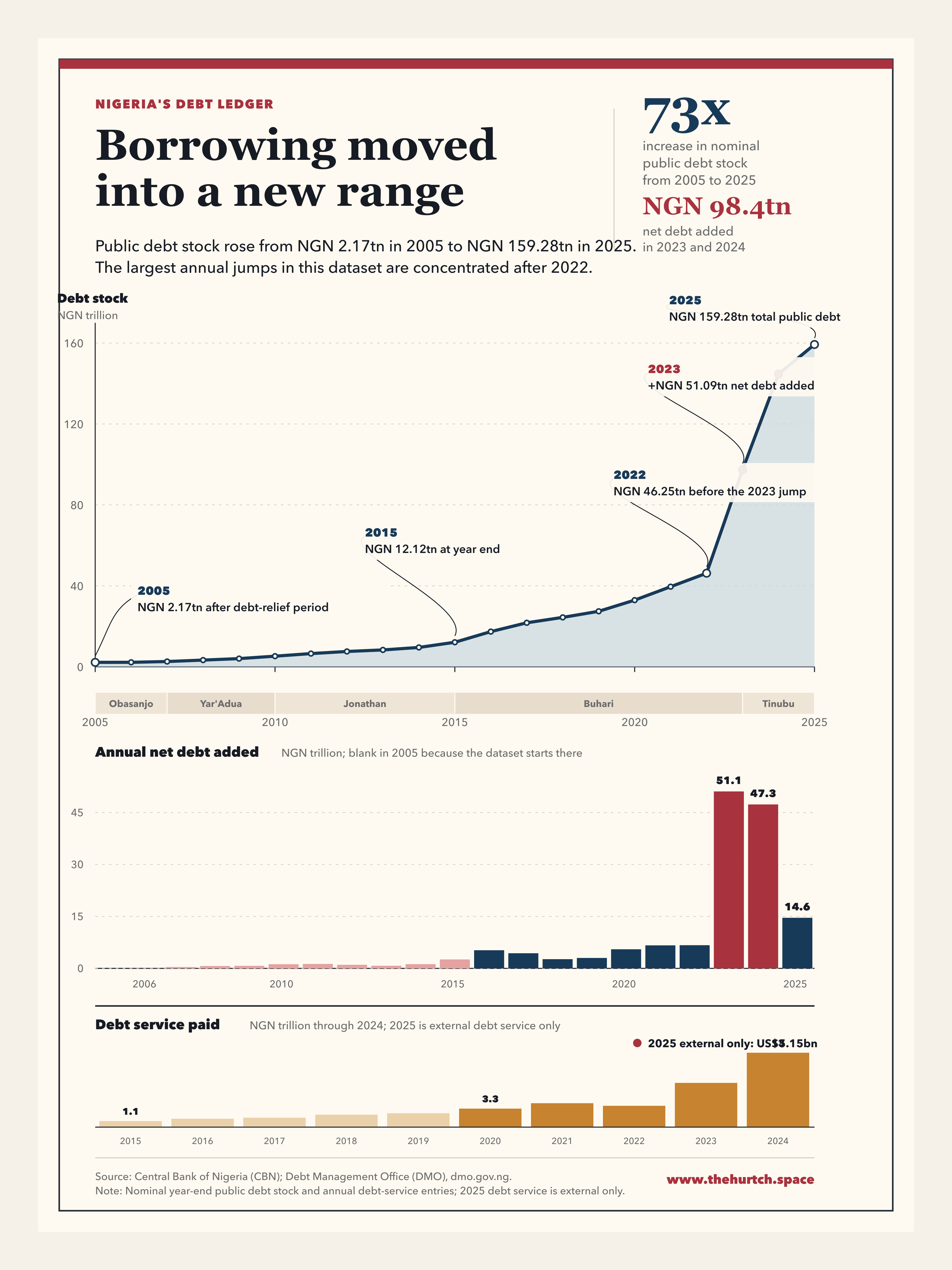
Nigeria’s public debt stock has grown 73 times over in two decades, from NGN 2.17 trillion in 2005 to NGN 159.28 trillion by the end of 2025. That number alone is staggering, but the shape of the growth is what should unsettle us [poor, vulnerable citizens who have only grown poorer].
For most of those years, the line was almost flat; a slow, manageable climb through the Obasanjo, Yar’Adua, and Jonathan years. Then, after 2022, something broke. In a single year, 2023, Nigeria added NGN 51.1 trillion in net debt [more than the entire debt stock that existed just eight years prior]. The Tinubu administration doubled what Buhari built in eight years, in less than two.
What makes this moment especially precarious is that borrowing has long since outpaced the government’s ability to earn. Nigeria’s debt-service-to-revenue ratio stood at an estimated 113% in the first quarter of 2025, meaning the country spent more servicing debt than it collected in federal revenue during that period [a figure that sits five times above the World Bank’s recommended ceiling of 22.5%].
In January 2025 alone, debt service obligations came to NGN 696 billion against total retained revenue of NGN 483 billion. Nearly three out of every four dollars Nigeria paid externally in 2025 went to debt servicing, not roads, not hospitals, not schools.
A country that borrows to service its borrowing is stealing from the future of its own citizens...